December 20, 2009
I have been in Madagascar for a week and a half. The transition has been ongoing and at times difficult. This entry, however, is about Niger. I realized the other day: although some of these days may drag on, time goes by quickly. I want to remember everything that I can about Niger before I forget, so this entry serves to illuminate in more detail what my life was like and to help me remember life in Niger. There, my name was Rashida Moctar.
Family
My host family was amazing in every capacity. My host father’s name was Moctar Salifou. He had three wives, though one had passed away. I interacted much more with Ramatu and Hamsatu, my host mothers, than I did with my host father, but he was very kind and soft-spoken. My host father, much like everyone else in Fandoga, my village, was a farmer. Ramatu and Hamsatu, like all Nigerien women, had work that spanned from before the sun rose until late after the sun had set. I rarely saw them resting. They were always pulling water, cooking, farming, gardening, cleaning, organizing the harvest, pounding millet, watching the children, and etc. Between all that, they cooked my meals and drew my water every day (they wouldn’t let me pull my own water—alternately because they were worried that I would fall down the well and because of my lack of calluses or muscle, comparatively speaking). Ramatu, who also went to a school to study some English and French, took the time to teach me Zarma whenever I had a meal with her, and she would let me hang around her while she was working so I could practice my Zarma. Hamsatu was always asking me if the things in Niger could also be found in the States, like peanut butter, beans, or if it was hot where I lived, etc.
I had seven host brothers and sisters. Popa was twenty-three and the oldest. He and his sister, Amena, who moved to Cote d’Ivoire with her husband a few years ago, were the children of my host father’s first wife, who had passed away. Popa would come and talk to me almost every night, teaching me Zarma, explaining things about Niger to me, or telling me stories about the previous trainees that were at my home stay. Our conversations were always hilarious because they were a mixture of English, which he didn’t speak, French, which I didn’t speak, and Zarma, which I could kind of speak. Mumunee (11 yrs, boy), Fatou (6 yrs, boy), Zaratu (4 yrs, girl), and Zeinabu (11 months, girl) were Ramatu’s children. Aishatu (4 yrs, girl) and Leminu (9 months, boy) were Hamsatu’s children. The babies were a bit wary of me, but the other children frequently played in my concession. Mumunee would come over every day to chat when he was finished with school or done with his work for the day. When I was doing homework, he would sit and watch me or do his homework with me. He was a great kid, and he taught me a lot of Zarma as well.
There were a few other kids in Fandoga that frequently came to my concession. Salamatu and Ramatu kayna were probably the most notable. Both were girls in their young teens, and I learned on my last day with my host family that Salamatu was my host cousin. During one of my first days at my home stay, I spent about three hours playing Jenga with Salamatu. I had no language skills at that point, so that was a pretty hilarious experience. She spent nearly the whole last day that I was in Fandoga with me.
Accommodations
My fu (mud hut) was located in my private concession, which had mud walls that were about 5.5 ft tall on three sides (my fu was the fourth side). My private concession was about 7’x10’ with a metal door, that eventually came off its hinges. The roof of my fu was made of different branches and straw that was strung together. Lizards lived in my roof, and I could hear them scuttling around whenever I was near my concession. I quickly overcame my fear of lizards while in Niger. They were everywhere. The best part of the living situation was that Nigeriens sleep outside every night, except in the winter. I slept outside every night under the stars (and my mosquito net), even during the winter when it gets as low as 40˚F at night. (Though during the day, since we arrived in Niger toward the end of their mini-hot season, it could get up to as high as 120˚F. The sun was pretty fierce in Niger, but it was a dry heat when we were there.)
My bathroom was a pit latrine with a cover. In Bangladesh, the pit latrines were often built on a foundation with a ceramic basin and a water cover so you couldn’t actually see down the hole. The latrines in Bangladesh were also often constructed like outhouses with a roof. My pit latrine in Niger was literally an 8” diameter hole in the ground with a mud cover that had a handle. You could see down into it, although I didn’t do that often after the first time. The scary part was going to the bathroom at night because a few cockroaches would come running out. I learned quickly that you need to rattle the cover a few times before you actually take it off. My time in Niger was too short for me to embrace the butta (traditional cleaning method, i.e. the teapot), which is used in lieu of toilet paper, an expensive luxury in Niger. Privacy in the bathroom was accomplished by the nearly 6 ft mud walls that surrounded the latrine, but there was no roof. The doors of both my bathroom and shower area were made of branches (that looked similar to bamboo) that had been tied together.
My shower area mirrored my bathroom (minus hole in the ground) and was right next to it (both were about ten feet away from my private concession, so I would have to leave my concession to both shower and use the bathroom). There was a small hole in the base of one wall where there was a natural slope to the ground so the water could drain out. Showering in Niger actually refers to bucket baths, where I put some water in a bucket and use a plastic cup as the showerhead, if you will. I enjoyed bucket baths, which I also occasionally had to take in Bangladesh and Korea. The best bucket baths were when the night air was cool, but you let the water sit out in the sun all day, so it was warm. (That was one of the nice things about Niger: you learned enjoy the little things.) I also hand washed all my underclothes in that bucket (since the PC Niger staff did our other laundry during training).
My private concession, shower, and bathroom were all located within a larger concession, which also held the primary well for the village, the hangar where we had some of our classes, and the garden that we used for our tech sessions. The next concession consisted of the private concessions that made up different members of my larger host family: my host family’s private concession and my host father’s relative’s private concessions. In hindsight, much of Fandoga, which was actually too tiny to be considered a village on its own, consisted of my different family members; there were a few concessions in Fandoga that weren’t related to my family. Fandoga was also surrounded by millet fields. It was about a 1 km walk to Hamdallaye, the town where the Hausa-speaking trainees were staying and where the training site was located.
Clothes
As it turned out, many of the clothes that I packed for Niger were not the most appropriate (though they are great for Madagascar). Niger, being a predominantly Muslim society, is very conservative in terms of dress. Though our packing list didn’t indicate as much, the best thing for women to wear were ankle-length skirts and loose fitting tops that covered both chest and shoulders (in contrast, Nigerien mothers would unabashedly breastfeed their children anywhere). Women also often covered their heads with a fabric wrap or a shawl-type thing. I was happy that I brought so many cloth headbands to cover my head. Everyone wore sandals, flip flops, or went barefoot. Children would often run around naked or with little clothing on, barefoot.
There were bright patterned (though imported) fabrics available in the market. We would purchase a swath of fabric and have it tailored into an outfit or a simple zara (skirt) that would wrap around the lower body and be secured with strings or just tucked in. The traditional clothes in Niger were beautiful and colorful. During the last week we were at the training center, the LCFs and PC Niger staff hosted a fashion show for us. They acquired enough outfits for all of us to wear as well as the traditional outfits of the different groups in Niger: Fulani, Zarma, Hausa, etc.
Food and the Habu (Market)
Food in Niger is traditionally eaten by hand. Family members eat with their own gender group and they often share a platter, which will usually consist of some staple, either rice or millet, and sauce. Pasta is also available in country, but it is considered as special occasion fare. I never had the opportunity to eat millet (hayni hawru in Zarma), which is the main dish of Niger, but I was often told that it was the most unappetizing food available as it is a gelatinous blob covered in, what the PCVs called, snot-sauce (lafoy in Zarma, or okra-sauce). I frequently ate rice and lafoy or some other sauce or rice and beans (dunguri nda mo) with a spicy oil sauce, but I never had hayni hawru. At my home stay, I also ate with a spoon and my own plate rather than with my hand and a shared platter.
Nigeriens cook with a lot more oil in their food than most Americans are used to. Meat is also a luxury. With the exception of Tabaski (a Muslim holiday, see below) I ate meat once at my home stay, and it was mostly fat and gristle. When eating at our home stays, trainees were also warned to chew carefully because there could be rocks that might chip our teeth. My rice was, more often than not, just sandy. It is difficult to pick out all the grains of sand from the grains of rice when you basically live in a giant sandbox. The weather in Niger is so harsh that food availability is heavily dependent on the season. We arrived as Niger was entering cold season, which meant harvesting and growing season. November was when people would begin planting their gardens after harvesting their crop, mostly millet and sorghum. Vegetables were available, but they were definitely not plentiful yet, and people often had to rely on dried varieties of veggies, like dried peppers or dried okra. My favorite meal at my home stay was kuduku nda foy, which was a type of sweet potato in a really thick sauce.
The other great thing to eat in Niger was the street food. Our host families were not responsible for feeding us breakfast, so our walk-around allowance included money to purchase street food. There were many different things available. Fari masa (fried white flour with sugar—we called them donuts, but they’re nothing like donuts), cecena (fried bean flour with tonko, which is pounded peppers), fried millet flour, egg sandwiches (which were more like egg subs), and French fries. Another great food item was Solani, which was liquid yogurt in a bag. It actually reminded me of the drinkable yogurt that I loved in Korea. While the plain was delicious, the strawberry and banana flavors were amazing. Because three of us trainees lived in Fandoga and didn’t have the time to walk to Hamdy every morning to buy breakfast and return in time for class, my host mom—Ramatu—would make and sell us fari masa. Each of her fari masa balls were about three times the size of the usual fari masa balls, which helped cut down on the amount of oil consumed, and they were much more delicious than the ones found in market (not that I’m biased or anything).
Market days were a cacophony of sights, smells, and sounds. I liked them because you could find street food at all hours of the day on market day, whereas you could typically only find the fried goodies in the morning on regular days. At the habu (market), which was Tuesday of every week, you could buy almost anything. There were many food sellers, including ingredients or fried foods. You could buy animals, including cow, sheep, goat, chicken, guinea fowl, donkey, or camel—all of these animals could be encountered on a daily basis just roaming the streets, sometimes sans owner, though we were informed that all the animals know where they live and who their owners are. You could find clothes (including hilarious Obama jerseys, which I’m disappointed I didn’t have the opportunity to buy), fabric, flip flops, batteries, buckets, etc. It was a crowded, loud, smelly place. There were multiple sellers who had the same types of products, and the size of the market was fairly large. Stores consisted of merchandise displayed under small hangars made of wood and branches. For me, Hamdy, the town and market was reminiscent of the street shops that I would see in Bangladesh lining the roads once you broke free of Dhaka. Some of the shops in Hamdy were in small cement or brick buildings, but most were homes that were constructed by wood and branches.
Religion
As I previously stated, Niger is a predominantly Muslim country. Over 90% of the population is Muslim, though it is influenced by animism—some places more than others—and a small number of Christians also reside in Niger. Though Niger is secular, the traditions and culture are heavily influenced by Islam. We would be woken up early in the morning by the call to prayer being projected from the mosque. It was a sound that we would hear several times a day, five to be exact.
There were several other ways that Islam influenced daily life in Niger, such as polygamy and traditional gender roles, but the most memorable occasion was Tabaski, which fell on the final weekend that we spent with our host families. Tabaski is a Muslim holiday that celebrates Abraham’s demonstration of faith when he was willing to sacrifice his son for God, who subsequently told Abraham to slaughter a goat instead. On the first day of Tabaski, there is a huge prayer in the morning. It is attended by men, children, elders, and some women who are able to go. Neither of my host moms went to the prayer. The people from Fandoga gathered with the people in Hamdy in a giant field to conduct their prayer. Many of the trainees were in attendance, and some even participated, though I did not.
Following the prayer was the slaughter of the goats. Families, who can afford to, slaughter goats in celebration of Abraham’s faith. My family and their extended family slaughter several goats. Men are in charge of killing the goats, and women are not permitted to watch their slaughter, though I was allowed to both watch and take photos, since I was an anasara (foreigner). Once the goats were killed, they were gathered, skinned, and gutted. The entrails went to the women who would fry them immediately for consumption that day, and the skins were left out to be dried. The meat (each carcass), bones intact, was stretched out on sticks in an “x” formation, and they were placed around a giant fire to roast throughout the day. The smell of raw meat and entrails wasn’t pleasant, but it was bearable even in the heat. The number of flies was unbelievable and pretty disgusting.
I’m used to eating different animal parts, so snacking on fried entrails was fun and delicious. It was also interesting to watch all the women together gossiping and playing around while preparing the food. For dinner that night, I had rice in sauce with hunks of liver that were in a different spicy sauce. The goat entrails are eaten during the first day because they are more difficult to preserve in the heat. All the meat is shared among family members and neighbors, as well as those who are in need of it, such as the Koranic students, who are sent out to beg for their needs, such as food, in order to learn humility (Muslims are subsequently required to give them food, if they can, as a part of their charity). During the first night, people also get dressed in their finest clothes to visit and greet their family and friends in other villages. People from neighboring villages came to Fandoga and my host mother, Ramatu, went to Hamdy to see her brother’s family.
The meat that has been roasting during the entire first day is consumed the next day. They actually further cook and preserve the meat by deep frying it in oil. The outside texture of the meat is chewy like jerky but the inside stays pretty tender. It tasted really good with tonko. Most people rest from work during Tabaski, though the women are cooking for the majority of both days. My host grandfather continued to receive visitors, such as his grandchildren who lived and worked in Niamey. They brought him goat hides and came to pay their respects. The second day of Tabaski was actually my last day with my host family, so I spent as much time talking to them and taking pictures of them as I could. It was bittersweet: I was happy to have been able to experience this last major festivity with them, and we were all sad that I was leaving. When the PC car came to get me, my host moms gave me huge hugs and a hot bag of fried goat meat.
Training
Nearly every PCV I’ve encountered has told me that PST (Pre-Service Training) was the worst part of PC service (not to say that it’s a miserable experience—just that it gets so much better). Part of the difficulty comes in suddenly being so restricted: our days are scheduled out for us in a way that is reminiscent of high school, on top of the mere difficulty of adjusting to a new culture and learning a new language (the inability to communicate is incredibly frustrating). I went through three uninterrupted weeks of PST in Niger, three weeks of training while we were consolidated, and I am completing another six weeks of training in Madagascar.
PST consists of several components: language (the most important), cross-culture, safety and security, health, administrative, and tech. The majority of PST is spent learning language. In Niger, our days went from 8:30 until about 4:00. Within that day, we would have two or three language sessions, and the other session(s) would consist of another training component. Training in Niger is conducted through community-based training (CBT), which basically meant that our training was conducted in our home-stay villages—for me, Fandoga. CBT facilitates our future integration into our communities, preparing us for our posts, and it immerses us in the language. Two days of the week were core days, where we would walk to the PC training center in Hamdy to have language and other group sessions, such as health, safety and security, administrative, and tech. (Core days were the best because we would get to walk to Hamdy for breakfast, which meant cecenas and Solani, and we got to eat good food at the training center—no sandy rice!)
Cross-culture topics included family and gender roles, eating etiquette, non-verbal gestures, scarification, and the impact of Islam on different aspects of society. Health sessions included everything from Mr. D (diarrhea, as Niger had the highest reported rate of diarrhea per volunteer of any PC country) to first aid to maintaining our mental health serving in PC Niger. As previously stated, some of these sessions were conducted at the training center in Hamdy, while the other sessions (for those of us living in Fandoga or ABK, one of the other Zarma-phone, Zarma-speaking trainee(s), villages) were often conducted under the big shade hangar outside my private concession. The Zarma health trainees’ garden, which we were working on for tech sessions, was also outside my private concession. Technical training during PST is really basic, since the most valuable skill to develop for successful integration is language. (Approximately three months after being at our permanent sites, the villages we serve in for our two years, PCVs meet for In-Service Training (IST), where more technical training is conducted). During PST, the health trainees were given preliminary sessions on the health interventions we would be conducting in Niger: maternal and child health, nutrition, immunizations, sanitation and hygiene, water, common diseases, STDs and HIV/AIDS. We were also presented with the structure of the Nigerien health care system and the obstacles to intervention.
As previously stated, language is the focus of training. It was amazing how quickly I picked up Zarma, but it was primarily due to immersion and the efforts of my host family. It is also extremely tiring to have so many language sessions in one day. I often found my rate of retention was low, particularly in the heat. By the end of the PST, there is a certain level of language that we must attain. To determine our progress, trainees undergo two Language Proficiency Interviews (LPI). The LPI is basically just a one-on-one conversation with a language trainer. There are certain topics covered, and they measure your level based on certain criteria, like your use of tenses and your ability to understand questions that are asked. By the end of PST in Niger, we were expected to reach Intermediate Mid. I had attained Intermediate Low by the time we left, so I was only one level away from the requirement.
Zarma is a spoken and not a written language. The Zarma-phones would often joke that it was like baby talk, where you just string together some words but it somehow makes sense (it sounded like baby talk as well). To make things more difficult, there were many homonyms in Zarma; every word meant five different things, and then there wouldn’t be words for other things. For example, in Zarma, there were only words for about six different colors—there was no word for purple. On the other hand, “bi” was the word for shade, yesterday, black, and a few other things (maybe rope?). One of my favorite things in Zarma was the greetings, which also existed in Hausa. Greetings were extremely important, and there was essentially a list that you would go through before you actually had a conversation with someone. When Nigeriens greeted each other they would just say the greetings and respond without pause or waiting for the other person’s response; they basically just talked over each other.
Greetings included:
Mate ni kani? = How is your morning? (This was kind of like “Good morning”)
Mate ni go? = How is your day?
Mate fu? = How is the home?
Mate gaham? = How is the body/health?
Mate ni almiyalo? = How is your family?
You would respond to all these questions with either “bani samay” which means “in health,” or with “talli si no,” which means “no problem.” Just to reiterate, you would say all of these and more that I can’t recall at the moment, not just one or two out of the list. A couple of my other favorite words/phrases that will probably stay with me for a long time include:
hamburger (pronounced differently, though similarly, than the food) = maybe
jam (also pronounced differently than the food) = bummer, sorry (the only word for “sorry” in Zarma, which seems wholly inadequate as it also means “bummer”)
bambata = big (best used in conjunction with “jam,” leading to the phrase “jam bambata,” meaning “big bummer)
In both Zarma and Hausa, there were also many proverbs that were used to express different thoughts and circumstances. They are in the Zarma language manual that I brought with me (somewhere deep in my suitcase), but I never had a chance to memorize them when I was in country. I just remember that the translations often rendered them nonsensical, several of them involved a donkey and, if I recall correctly, one involved a vampire.
This is a long entry, and I think I covered everything I wanted. I expect that it illustrates better what my life was like in Niger, and I only hope to write just as fondly about Madagascar soon. I’m still adjusting, but I think I will learn to love it here too.
February 11, 2010
I am officially a Peace Corps Volunteer. I swore in on January 26, 2010, and I have been living at my site for two weeks. I have definitely been riding a roller coaster of emotions; every moment of every day is so unpredictable, but I will write more about my experience in PC Madagascar another day. Today, I want to write and remember a quote that was on the board of the refectoire in Niger. Every time I read it, it gains new meaning.
“The magic of travel is that you leave your home secure in your own knowledge and identity, but as you travel, the world in all its richness intervenes. You meet people you could not invent; you see scenes you could not imagine. Your own world, which was so large as to consume your whole life, becomes smaller and smaller until it is only one tiny dot in space and time. You return a different person.
Many people don’t want to be travelers. They would rather be tourists fitting over the surface of other people’s lives while never really leaving their own. They try to bring their world with them wherever they go, or try to recreate the world they left. They do not want to risk the security of their own understanding and see how small and limited their experiences really are.
If we don’t offer ourselves to the world, our senses dull. Our world becomes small, and we lose our sense of wonder. Our eyes don’t lift to the horizon; we don’t hear the sounds around us. The edge is off our experience and we pass our days in a routine that is both comforting and limiting. We wake up one day and find we have lost our dreams in order to protect our days.
Travel, no matter how humble, will etch new elements into your character. You will know the cutting moments of life where fear meets adventure and loneliness meets exhilaration. You will know what it means to push forward when you want to turn back. And when you have tragedies or great changes in your life, you will understand that there are a thousand, a million ways to live, and that your life will go on to something new and different and every bit as worthy as the life you are leaving behind.”
-Unknown
March 11, 2010
I have now been living at site for about a month and a half. I’m still riding a roller coaster of emotions, but I am happy every day too. I’m at an awkward point where I’m still not that great at Malagasy, and I am starting to forget how to speak and write proper English. I’m sure that the language in this entry is going to be repetitive, so I apologize in advance if the things that I write aren’t clear.
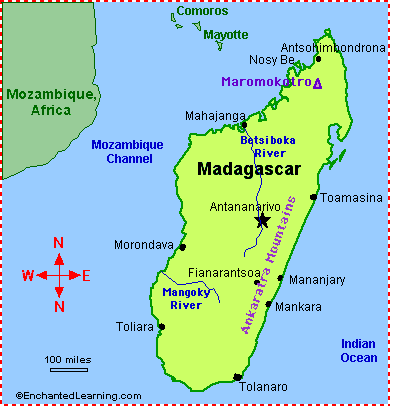
I arrived in Madagascar mid-December of last year. We had a day-long layover in Paris, which was as exhausting as it was exciting. Walking around Paris after having spent a month and a half in Niger was both cold and surreal. The level of infrastructure is incomparable, and there was a distinct absence of animal noises and smells, among other things. After a 10-hour flight from Paris, we arrived at the airport in Antananarivo and were met by members of the Peace Corps staff. The following day, we hastily went through interviews with the people in charge of our different sectors—health, in my case, and we were whisked off to Montasoa, a city about two hours south of Antananarivo, where the training center is located. Carsickness is definitely an issue here. The roads remind of the ones in Nepal—unpaved, winding, and with lots of ruts and holes. It doesn’t help that it rains often in the area around Mantasoa.
The training center in Mantasoa is very different from Tondobon, the training center in Niger. Being at Mantasoa is like being at a really nice summer camp and parts of the center feel like you’re at a resort. The training center overlooks Lake Mantasoa, and we were able to go canoeing in our free time. It’s also very green, which was a shock coming from the desert. There are still many development issues in Madagascar, but in comparison to Niger, life is easier for a PCV in many ways. For one thing: the simple availability of food. It’s possible, but difficult, to grow things in the desert. Gardening in Niger was a lot more labor intensive and uncommon than it is in Madagascar. There are lots of fruits and veggies available here, although the staple food is still rice. Despite the availability of food, people don’t know how to eat a balanced diet, often eating lots of rice with only a one veggie or meat item on the side. Nutrition is one of the health interventions that the volunteers here are encouraged to work on. Water is also available in abundance both in Mantasoa and at my site, Mandrosoa; although this isn’t true for every place in Madagascar. Niger was so dry. Though water may be available here, people aren’t careful with water sanitation, which is another health intervention that volunteers are encouraged to work on.
Training usually lasts for ten weeks but because of the unusual circumstances of my training group, i.e. our evacuation from Niger; we were expedited through in six weeks. We also only spent our last three weeks with a host family instead of the entire training period, which is how training is usually conducted. Training is stressful, and I’m glad that I didn’t have to do a full ten weeks, but there are also some major disadvantages. For one thing, my language skills are not where they should be. Missing out on four weeks of language and not living with a host family throughout the entirety of training resulted in my testing out at the minimum level of language requirement for a trainee to be sworn in as a volunteer, making some days at site all the more stressful.
Training in Madagascar has similar components to the training conducted in Niger. The primary focus is on language. Sessions went from around 8:00 a.m. to 5:30 p.m., and at least two of our sessions during the day were language. In some ways, Malagasy is really simple, and in other ways, it’s very difficult. Malagasy grammar—by virtue of its existence—makes the language much more complicated than Zarma, the language I was learning in Niger. I learned standard Malagasy—Merina—and not one of the dialects because of the location of my site, which is very near Antananarivo. Some volunteers, mostly those along the coasts had to learn different dialects.
The conjugation of verbs (in the active) is very simple, you just replace the first letter of each word depending on which tense you want to use.
e.g.
Mianatra: to study, present tense
Nianatra, past tense
Hianatra, future tense
But I have yet to even try to master the relative, passive, imperative, and substantive tenses, which have no discernable—at least to me—pattern. Many nouns, in reference to people, are simply the verb, the action of the person, with the letter “p,” although you don’t pronounce the “m.”
e.g.
Mianatra: to study
Mpianatra: student
There is no plural tense in Malagasy, but another complicated thing about the language is that you don’t pronounce all the letters in a word. And the words are very long.
e.g.
Mihazakazaka: to run (It took me forever to be able to say this word.)
Mikitikitika: to touch
Mitsangitsangy: to joke
The other training sessions were composed of technical training—i.e. health training, cross-culture, safety and security, medical, and administrative sessions. Cross-culture included topics like dress, gestures, the different ethnic groups of Madagascar, etiquette, religion—animism, and etc. Technical training was definitely the most stressful because during our six weeks we had to make four presentations in Malagasy on different health topics. I guess that during a normal training session, trainees have to make a presentation once a week. Our first presentation was seven minutes, and it was in front of our Associate Peace Corps Director (APCD), Boda; our Program Assistant (PA), Tovo; and each other. Our second presentation was at a local CEG, the equivalent of a middle school, and our third presentation, which was cancelled, was supposed to be at a local EPP, the equivalent of a primary school. Our final presentation, which we conducted alone, was in front of our host families and different members of the PC training staff, and it lasted twenty minutes. Having to give all of these presentations in Malagasy, while not being good at the language, and trying to find the time to spend with my host family during all of this was really stressful. Needless to say, during that time I was glad that Madagascar is not a dry country like Niger. Some of our fun technical sessions included weighing babies, building a clay cook stove, and playing condom games. At our future training sessions, we are also going to work on gardening, which will be fun. Health interventions in Madagascar include nutrition; water sanitation; hygiene; safe sex, STDs, and HIV/AIDS; acute respiratory infections; malaria; safe motherhood; vaccinations; family planning; and etc.
The health trainees all lived with different families in Lohomby, a small town about a 45-minute walk from Mantasoa. I lived with an older family (Mama Fara and Dada Henri), whose youngest child was fifteen years old; her name was Tetena. Yvette, who was seventeen, was the one that I spoke with the most often. She was the one who took me around to do chores, like fetching water and doing laundry. Ando was twenty-two, and he was really sweet. He would talk to me often and ask me questions about the U.S. He tried really hard to make me feel comfortable in their home. All of the other children were grown and lived away from home. I laughed often with my Malagasy family, and I guess that you could hear me laughing from several houses away, so that’s what I was known for around Lohomby.
My family’s house was three stories, but it was really small and narrow. Most Malagasy people are very little, and I towered over all my family members. It was always treacherous going up and down the stairs, which were really narrow and steep. I lived on the first floor of the house in a room that was a part of the house but didn’t have an entrance into the rest of the house. My shower and latrine were both separate from the house, but unlike in Niger, they were enclosed spaces with roofs.
My family taught me to cook, which they do over a fire. I danced with my family at a wedding reception that was going on in front of my house. Dancing is a pretty big part of Malagasy culture, and it seems to me that everyone here knows how to dance. My family, along with some of the other trainees and their families went on a crazy trek to some giant rocks on top of a mountain. (I am so out of shape, I almost died on that trip.) And the other health trainees and I taught our families in Lohomby how to build clay cook stoves, which reduces smoke and the amount of wood needed to cook—both healthier and more environmentally friendly. I wasn’t as close to my Malagasy family as I was to my Niger family, but I was still really sad to have to go. They are really great people, and I’m excited to see them again when I return to Mantasoa for training in May.
I swore in as a volunteer on January 26th at the U.S. Ambassador’s residence. Everything around that time is kind of a blur. It was really exciting though, and I went out to celebrate that night with some of the Malagasy teachers and some of the other (no longer trainees!) volunteers. That night wasn’t without tears and neither was the next morning—the day that we were all moving to our sites. I was really sad to be separated from everyone, and I was really scared to go to site and be alone for the next three months. For the next two years, I am living in Mandrosoa, a town about a two-hour drive south of Antananarivo. The terrain here is very similar to Mantasoa: green and mountainous, and it rains often here. It can also get quite cold, which is not true of other parts of Madagascar. (Madagascar is a very unique country. Something like 80% of the flora and fauna are endemic to Madagascar. I live in the highlands: green, mountainous, and rainy); to the west and south you have hot, dry desert; along the coasts you have your beach paradise. (As a side note, I also got to see lemurs when our trainers took us to Andasibe Park over Christmas.)
I live in the CSB (local health center) compound in a two room house (bedroom and kitchen/dining area). My house is not made of mud like the one I had in Niger. My walls are entirely solid, my roof is made of tin, my doors and windows are made of wood, and I have a cement floor. My house is actually really big for just one person, particularly by Malagasy standards. The rasazy (midwife), who is my neighbor, lives in a house that is only a little bit larger than mine with her husband, seven children, and one grandson. I have an outdoor latrine (that was once a flush latrine but is no longer), and my shower is in the maternity ward of the CSB. I am hoping to get a new latrine and shower built closer to my house. I cook with a gas stove rather than using wood, which is a pretty big luxury out here in the ambanivohitra (the country—rural area). Although I live close to the capital, I am definitely living in a small town.
I cried a lot during my first few days at site. So far, those were my hardest days, and I was seriously entertaining the idea of returning to the U.S. (I should mention for any future trainees that my group didn’t get to do site visits, which is a normal part of training. I think you get to spend about a week at the place that’s going to be your home for the next two years before you actually swear in as a volunteer.) I am the third volunteer to serve in Mandrosoa, although the last volunteer left in 2007. (I guess there were supposed to be a couple volunteers here throughout the years, but they both ET-ed.) There are both advantages and disadvantages to serving in an area where people are already a bit familiar with Peace Corps. On the one hand, people already know why there is a “vazaha” (foreigner) running around the area—not that I don’t still get stared at on a daily basis. On the other hand, not a day goes by when I don’t hear the names of the two volunteers who served before me, making it difficult sometimes to establish myself as an individual. Plus, they both left really big shoes for me to fill as a volunteer.
It’s hard to say concisely what my life is like. I have an established pattern, but every day brings new surprises as well. So far, I have done a lot of paperwork on vaccine and prenatal consultation days. I’m slowly working on being able to give health messages during these days, but my language isn’t quite there yet. Every week I walk to the surrounding villages to work with SEECALINE, an organization focused on infant and child nutrition. I help weigh babies, and I will start giving messages on proper infant and child nutrition including exclusive breastfeeding, weaning foods, and balanced diet. I’ve also started teaching American songs to a couple classes at the local elementary school every week.
I go to church here, which is something that I haven’t done for years. The majority of the people in Madagascar are Christian. I go to a Catholic church here in Mandrosoa, and then I go to a Protestant church in Mahitsitady, a neighboring town—rotating every other week. I go with some of the friends that I’ve made here, and as bad as it probably is to use church as a political tool, it’s a good way to get my face out there and to get people familiar with me.
March 8th was Women’s Day, and there was a big festival held in honor of the day. The women’s organization in Mandrosoa convinced me to dance with them (in front of the entire commune) during the festival—that definitely got my face out in the community. It started with me going to watch the women’s soccer games, since I had only gone to see the men’s soccer games before. I didn’t realize that they were preparing to play for Women’s Day, and then one day, they told me they were going to dance. I really want to learn Malagasy dancing, so I went along with it. During this time as well, a couple of the teenage girls approached me to teach them American dancing. I was too embarrassed to do it at first, but I eventually caved. I didn’t realize it at the time, but all of this was in preparation for Women’s Day. Thus, I ended up dancing to three (pretty long) songs. It was great though, and I really liked learning Malagasy dancing. People around here definitely know who I am now.
I am slowly making friends, although I still have moments when I feel alone here—but that’s inevitable. There is a family that owns a hotely (restaurant) down the street that I’ve become pretty close to. If it weren’t for them, I probably would have starved my first week at site, since I was afraid to leave the CSB compound much less go out and buy food. There are also tons of kids that come to my house to play every day. Sometimes it’s overwhelming, but the kids also keep me going day to day. This past weekend I taught them how to play Egyptian Ratscrew, so that’s been the latest exciting things going on around here. I am even starting to make peace with the group of teenage boys that occasionally heckle me—particularly when they’re drunk.
That’s one thing that I didn’t think that I would have to deal with during my Peace Corps service—alcohol. One of the benefits of serving in Niger was that it’s a Muslim country, so there was little to no alcohol consumption. Furthermore, because of the strict nature of Islam, when someone stepped beyond the bounds of propriety, you could shame them. There is no such thing here, and there are days when the men are drunk beginning at noon. I have never been hissed and whistled at so much in my life. It still makes me uncomfortable, although I ignore it, but I’m starting to get used to it too.
I’m not sure what else to write about my life. I’m sure that no amount of information is enough, but it’s really hard to concisely say what life is like here. I’m in health—no major bouts of illness, although there was a mysterious vomiting incident that had me running in and out of prenatal consultations the other week. And I have had a serious case of fleas/bed bugs since arriving at site. I’m also pretty sure that despite the fact that I’m in a developing country in Africa, I am going to gain so much weight while I’m here. I love fried bread! And although it’s healthy, I eat more fruit than is probably necessary for any one individual. The way the exchange rate works out, it costs about twenty cents for a pineapple here. I’m also addicted to “kaki,” which is an orange fruit, about the size of a big apple that I never saw in the states, but it’s delicious. I eat two or three a day.
I can already tell a month and half in that when it comes time to leave, I’m not going to want to. It’s like Bangladesh all over again (and I was only there for three months), where I’ve already made good friends and I’m really motivated to do the work that I’m doing. Two years is such a short amount of time, and I know that there is a lot of good work that I can do here. It’s frustrating to me that my language will be at its best when it’s time for me to go. Of course when I told my mom this the other day, she laughingly told me that two years is a really long time, i.e. you are coming home when your service is over. I can’t imagine never returning to the U.S., but I can already tell that it’s going to be so hard to leave Madagascar (but I’m getting way ahead of myself). Time really does fly here though, already a month and a half!
The only other thing that I want to write is a packing list. (Oh, what I would give to be able to hit a restart button and pack for Madagascar.) I know that when I was getting ready to leave for Niger, I relied heavily on the packing lists that other volunteers had posted on their blogs. I heard that there was a political coup in Niger (though I don’t know any details, since I live in a bubble of no information), so that on top of the kidnappings leads me to believe that Peace Corps probably evacuated the country, but I will write a bit for Niger anyways, on the hope that the program didn’t close, and if it did, on the hope that it will reopen soon.
Women going to Niger: don’t bother bringing pants (except maybe a pair of sweatpants to sleep in during cold season). The longer the skirt the better—you can get away with mid-calf, but definitely nothing above the knees, or even close to the knees. Ankle-length skirts are best. Loose fitting t-shirts are good and shoulders always need to be covered. Shirts that are made of lighter material are also good. Women also cover their head, but you can buy material in the markets. Flip flops are great, a lot of volunteers had Chacos; I had Tevas myself—awesome PC discount! It’s hot! I would bring maybe one sweatshirt for cold season, but that’s all that you’ll probably need.
For either Niger or Madagascar, if you have an MP3 player, bring it! I brought my ipod, and there are some days when just being able to listen to American music makes me feel so much better. Plus I use it a lot of teach American songs here. Before leaving for Niger, I bought a Solio (solar charger) to charge my ipod, since I assumed that I wouldn’t have electricity, but I have electricity at the CSB in Mandrosoa. A speaker for your MP3 player is also nice. I bought an Altec Lansing brand speaker that has good volume and battery life. I would buy a good flashlight; if you get a crank flashlight then you won’t have to worry about spending money on batteries, but you can buy flashlights both here and in Niger. The same goes for shortwave radios. I wish that I had brought one, but you can buy them in both Madagascar and Niger. In Niger, you will definitely need to bring at least one flat sheet, and you should get a sleeping bag. In Madagascar, sheets are provided at the training site, and you can buy them in Tana before you go to site. I used my sleeping bag in Madagascar when I went to Andasibe Park, but so far that’s been the only time; I’m told that there’s good camping in Madagascar though, so a sleeping bag may come in handy.
It’s also hard what to say to pack for Madagascar because the things that you will want will depend on where you are ultimately posted. For women, pants are no problem. I only brought one pair of jeans, and I wish that I had brought another. You’ll want at least one sweatshirt; it gets cold at the training site. And I’m also really glad that I brought a rain jacket; it rains a lot at Montasoa and Mandrosoa. Most of the women here wear skirts, and those should go below the knees. T-shirts are fine. I occasionally see women with sleeveless tops, but it’s pretty infrequent. It’s better to dress more modestly here. You definitely don’t want to draw more attention to yourself than necessary. I would bring a wide-brimmed hat—the sun is hot, and a baseball cap. Most people here wear flip flops, but it’s also nice to have shoes that secure to your feet—the roads are slippery when wet; again, a lot of people have Chacos. You will want to have one or two good outfits, although you can find plenty of clothes here. It’s much easier to come prepared with something though, particularly for swearing-in and any other formal event that you need to go to.
For Niger, try to bring wear a versatile outfit as “business casual” at staging. You don’t want to waste packing space of a pair of black dress pants that you’ll never wear in country. I wore khakis that I would never have worn in country—a long skirt would have been better. For Madagascar, you may end up being glad that you have some nicer clothes. I’m told that people in the education sector need to dress well. I get around most days in a t-shirt and jeans, but I have a nice pair of khakis and a couple skirts for when I go to church or have to be more presentable.
I brought a netbook (Asus Eee pc1000) on the assumption that Niger would kill my baby i.e. my Macbook, with the fierce heat and copious amounts of sand. Now that I’m in Madagascar, and I have electricity at my site (which is not true of all sites, particularly for environment volunteers who often get placed in more remote, rural areas), I wish that I had my Macbook. I’m told that there’s now wireless at the MEVA, the PC Volunteer house in Tana, as well. If anything else, I enjoy watching movies that I’ve taken from some of the other volunteers who had the foresight to load up external hard drives with movies and music. I would recommend bringing a computer, and if possible, I would get an external and load it up with all the movies and shows that you’re going to wish you had for the next two years, even if it’s only for nostalgic reasons. Plus, current volunteers would be really grateful for new material.
I bought a new digital camera before leaving for Niger. It’s a Nikon Coolpix S570, and even though it’s much more advanced a camera than I’m used to using, I’m really happy with the zoom capability alone. I’ve gotten some great photos of Niger and Madagascar. I was also gifted with a flip camcorder, which is also a handy little device. I’ve used it to record some good footage of shenanigans during training. I think it’s definitely worth it to bring a camera, if that was even a question—though I know that in Niger at least, the heat is a pretty strong deterrent against bringing electronics. Still, I would say that it’s definitely worth it. And it’s also worth it to insure your belongings, especially for people coming to Madagascar as the rate of burglary, theft, and pick-pocketing is really high.
I would bring a few books to read during your down time. There’s only so much studying you can do before your retention goes down. If there is a book that you can’t live without, I would bring it, but other than that, I would say that you should only bring a few books. Books are heavy and you don’t want to waste valuable packing weight with a library. Plus, there are books at the MEVA that you can always borrow, and books can always be sent from home. If you have the money, a Kindle might be a nice investment. I kind of wish I had one, but I’m still not sure how I feel about digital books.
If you play an instrument that is transportable, bring it. In Madagascar at least, people are very musical. It seems like everyone here loves to sing and knows how to sing. I’m learning guitar from one of the rasazy’s sons, Rado, who is an amazing guitar player. You can buy guitars in Tana, and they aren’t that expensive. I bought mine for around $40, but you can find ones that are cheaper and ones that are more expensive as well.
I’m happy with the luggage that I brought, including suitcase, hiking pack, and backpack. It’s nice to have different size bags for when I travel. Eagle Creek also has really quality bags and a really great PC discount. In Niger, it was much harder to find quality bags—I think that if you had any chance at all, it would be in Niamey. Here in Madagascar, if you look hard enough you can pretty much find anything you need, so I wouldn’t stress too much about it. But I love my hiking pack!
If you have extra luggage space/weight, I would use it on spices and food. You can find almost anything in Tana, but it can get pretty expensive, and I don’t think you’ll be able to go until after training—about three months. It doesn’t seem like that long of a time, and you may think that going without is part of the PC experience, but you’ll be happy later when you’re busting into a bag of M&Ms after having a rough day with language or when you’re stressing about a presentation. I’m also glad that I was given a bunch of Crystal Light drink mixes before leaving; they’re pretty lightweight too, which is nice.
I don’t know what the cell phone situation is like here in Madagascar, but in Niger, I think we were supposed to be able to get them during our fifth or sixth week of training. If you have an international cell phone (I think it’s a GSM phone, but I can’t remember), then you can use it in either Niger or Madagascar, you’ll just need to buy a new SIM card. I forgot to bring the phone that I bought in Bangladesh when I left for Niger, but it would have worked as well. My training group ended up getting cell phones during consolidation in Niger. The Internet availability in Niger, from my limited experience was basically nonexistent. I got to use it once while I was at the transit house in Niamey, but then the connection was so slow, and the pages weren’t loading correctly; it wasn’t even worth it. Here in Madagascar, there is Internet available in bigger towns. Most people should have Internet in their banking towns. Unfortunately for myself, since Tana—which was initially the banking town for my site, pre-crisis—is a red zone, I don’t have access to Internet unless I have business in Tana; and I have had none, which is evident by my compilation of blog entries.
I think that’s all that I want to say as far as packing goes. I hope my ramblings are helpful. Oh… and don’t forget to bring plug adaptors. You can find them in country but it’s much easier if you bring your own. And plug adaptors and converters are not the same thing. Check the voltage on any appliances that you bring. If they don’t accept the proper voltage, you’ll end up frying your electronics.
April 30, 2010
And I have been at site for three months. A billion things happen every day, and time goes by so quickly; I don’t even know what I should write about. My Malagasy has improved to the point that I can communicate pretty well with people on a daily basis but not to the point where I’m able to really work yet. It’s still frustrating, but I’m working on it. I’ve been doing really well since my last entry at not being so shy and forcing myself to speak to people regularly, even though sometimes it’s really awkward. I’m known pretty well around town for always laughing—at everything; don’t really have the language to express my delight in awkwardness, but people always tell me that it’s good that I’m “faly, faly foana” (always happy).
I’m getting a new latrine built behind my house! This is exciting news for me because there were some days when the old latrine was really starting to worry me. And it’s been mildly bothersome that I’ve recently had to start sharing it with the pharmacist here at the CSB, since her latrine broke. I may also be getting lights installed in my house, so maybe no more candles! I don’t really mind not having light, but I really hate candles—mostly because I’m clumsy with wax.
One major thing that happened since I last wrote was Easter weekend, which was a whirlwind of adventure. Easter is a huge holiday here. I went to Andramasina, my banking town, for Palm Sunday, where a ton of people congregated at the big Catholic Church. It was pretty crazy. The Saturday before Easter, I ended up dancing at the Catholic Church here in Mandrosoa with the different groups of people doing body worship. Again, there were a lot of people watching. The crowd here in Mandrosoa during Easter weekend was intense. The normally quiet, small town was packed with people. And of course, I gained a lot of attention because I’m “vazaha” (foreigner). However, Easter Monday is the real spectacle. There are tons of people and there were a couple concerts going on: one hosted by the Catholic Church and the other hosted by the Protestant Church. I watched the concert sponsored by the Catholic Church with some friends. It was a great show; I really love Malagasy dancing. Easter Monday was also the first time that I drank publicly at site, though I have drank here since then. I spent part of my afternoon helping my friend sell bread at her hotely, since she was so overwhelmed by the crowd, and in the evening, I drank with some of the boys that always heckle me. I’m not so concerned by them anymore, and we’re actually getting to be pretty good friends now. Rado, the rasazy’s son, is one of the boys that I hung out with on Easter Monday, and he is teaching me to play the guitar and Malagasy songs.
I spent several days in April working in the rice fields with different people that invited me to do so. I had a great time walking around in the rice paddies and getting my hands dirty. I haven’t learned to cut the rice stalks or carry the bundles of rice on my head yet, but I am good at tying up bundles of rice. While people are harvesting rice, the town is particularly quiet, so I appreciated the opportunity to go around and do something with people instead of just sitting around my house, like I did most often during my first few weeks at site.
I’ve had one bought of food sickness, which was unpleasant but not utterly miserable. And I still have a crazy case of fleas, but other than that, I’m in health.
I still play with the little kids on an almost daily basis, and I am still teaching them American dances and songs. They keep me happy. Last week, I made a PC oven, so I can now bake things using my gas stove. I had a good time making chocolate cake with some of the kids that came by my house. I’ve also been playing basketball with some of the teenage girls during my spare time. It’s really hard to play with them though because they’re all so little, and I have the unfair disadvantage of being twice their size. I’m super tall and big in comparison to the people here. I’m always worried I’m going to hurt one of the kids during a game.
This past week was one of the bi-annual weeks dedicated to the health of women and children in Madagascar. I spent all week going around the commune of Mandrosoa with different health workers distributing vitamins and de-worming pills to women and children. I didn’t do much speaking, which is something that I need to work on, since this would have been the perfect opportunity to deliver health messages, but I did do my fair share of paperwork. This week was also exhausting since we were going to two villages every day, and some of them are located quite far away. Tsinjoarivo is probably the farthest in terms of distance (maybe 9 or 10 km away), so I had to go by bike, which wouldn’t be a problem except the roads are horrible. It’s exhausting pushing a bike uphill, and it’s frightening riding a bike down a mountain; I almost fell so many times when my bike went out of the grooves on the path. I think my most exhausting day was when I had to walk to Morarano, where I go every Friday to weigh babies, and Soalavitra. Morarano is about an hour walk away, which isn’t that bad of a walk, except that the footpath is constantly uphill and downhill (and sometimes really steep), but the health worker and I were running late that day, so we basically made the walk in forty minutes rather than an hour. Then the walk home from Soalavitra also included a walk up a really steep hill. I wasn’t sure that I was going to make it. I was so tired. I also didn’t shower for four days this past week, since I had no time. Even if I had time, I was way too exhausted.
My schedule returns to the normal slow pace next week, and then during the second week of May, I will finally be able to go into Tana. I am going to be working with another volunteer, organizing an HIV/AIDS awareness festival to be held in Montasoa, where my training group will be returning again to train in May. I’m really excited, mostly because I’m hoping that I will finally get to access Internet, and I will be able to put up this enormous compilation of posts. And I’m really excited to see all my friends from training.
I’m getting by day to day, and I can’t say that I still don’t have my hard moments, but I really am happy every day. I’m not doing world-changing work, but I think that I am teaching my community new things every day—though not so much about health yet. Whenever I sing, dance, or have a conversation with the people here, I feel like I’m doing something good in the sense that I’m providing them with the opportunity to experience a part of American culture that they would otherwise not have experienced. However, I am gaining a lot more out of this service than anyone here is receiving. I am learning so much every day, and I have made some really great friendships. I get really sad when I realize that three months of my two years have passed—two years just isn’t long enough.
I think that’s about all that I have. I’m sure that this entry is utterly inadequate for the amount of time that’s passed since I’ve last written, but so much has happened that I can’t properly contextualize, given my loss of the English language. Plus it’s almost 9:00 p.m., which is pretty late for me, and I need to get up really early to do laundry tomorrow—by hand, might I add. Oh, life.
Amin’ny manaraka. (Until next time.)
Magazines (Time, Newsweek, People, Cosmo, The New Yorker, etc.)
New clippings and good articles
Candy: Reese’s Peanut Butter Cups, Dark Chocolate Peanut M&Ms, Starbursts, etc.
Instant oatmeal
Instant dry mixes (Knorr sides, etc.)
OREOs
Dried fruit
Muffin/cookie mixes
Hot chocolate
Music and movies, via USB drive
Books
skip to main |
skip to sidebar
You have brains in your head. You have feet in your shoes. You can steer yourself in any direction you choose. You're on your own. And you know what you know. YOU are the guy who'll decide where to go. ~Dr. Seuss

Disclaimer
The contents of this website are mine personally and do not reflect any position of the U.S. government or the Peace Corps.
Address
Debrah Lee, PCV
Corps de la Paix
B.P. 12091
Poste Zoom Ankorondrano
Antananarivo 101
Madagascar
Corps de la Paix
B.P. 12091
Poste Zoom Ankorondrano
Antananarivo 101
Madagascar
Antananarivo |
Hi Debrah!
ReplyDeleteMy name is Sophie and I work for the publishing company Vakoka Vakiteny in Toliara. I just came over your blog and found it interesting. I really hope you enjoy our country!
Perhaps you are interested in some of our products. We have books and school materials for sale. There is more information on our web page and on our blog. The web page is www.vakiteny.org. If you know someone being interested in Vakoka Vakiteny, please let me know. We are searching for partners.
Looking forward to hearing from you,
Sophie
mparany@vakiteny.org
famrakotondrainy@gmail.com